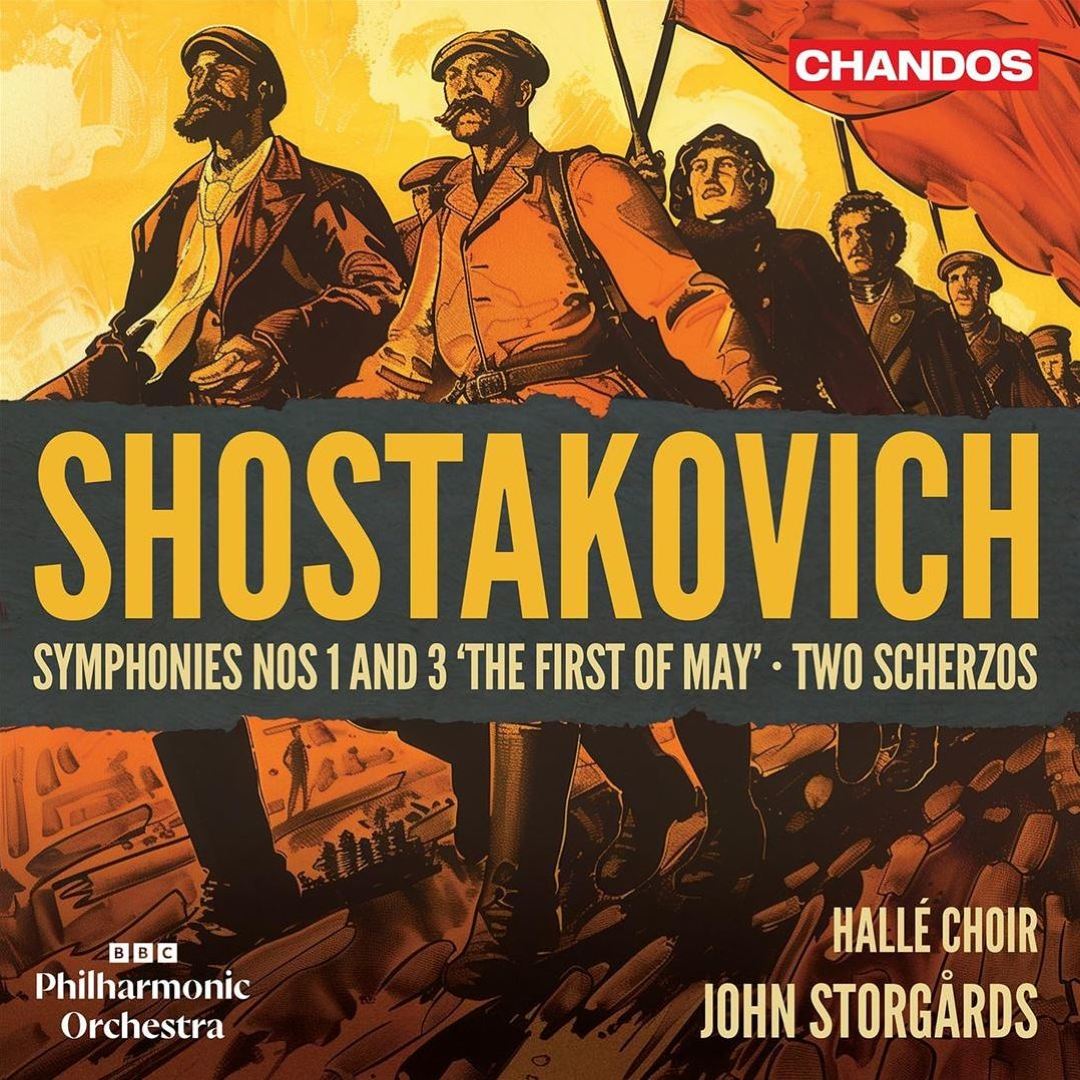
GENRE; Classical
RELEASE DATE; 15 August, 2025
RATING; 4/5
⭐️⭐️⭐️⭐️
This new release is a thoughtful and often revelatory survey of Dmitri Shostakovich’s youthful orchestral voice — mixing early works with formative symphonic statements. On the two juvenile scherzos (Op. 1 and Op. 7), the playing is sprightly, historically curious and lightly nostalgic: the scherzos may lack the fully‑formed poignancy of his mature output, but they hint at the restless energy and emerging craft of a young composer learning his tools. The performances are clean and precise, giving clarity to textures that sometimes feel blurred in older recordings.
The album then moves to the powerhouse that is Symphony No. 1 in F–minor, Op. 10 — a work pulsating with ambition and youthful complexity. Under Storgårds, the BBC Philharmonic handles the rapid shifts and orchestral bravado with technical assurance, managing both the swaggering outer movements and the shimmering, somber heart of the slow movement with control. That said, some reviewers still felt the performance lacked a certain emotional guts at pivotal moments — a subtle trade‑off for its polish.
Finally, the real test: Symphony No. 3 in E‑flat major, “The First of May” (Op. 20), a choral‑symphony infused with both political overtones and musical experimentation. The interpretation here is considered one of the strengths of this edition: the orchestral writing’s episodic, cinema‑like momentum is rendered with a sense of cohesion and forward drive, while the Hallé Choir adds a suitably reverent weight to the concluding chorus — even if the piece itself (like many early Shostakovich symphonies) remains dramatically uneven.
In short, this album doesn’t deliver a fully unified picture — Shostakovich’s early ambition and inconsistency are still very much on display — but under Storgårds’ guidance, the playing and production turn this into an illuminating portrait of a composer in development: energetic, curious, sometimes a little rough around the edges, but always compelling. For anyone interested in Shostakovich’s formative years, this is a powerful and rewarding listening experience.
